
Native Crop Toolkit
A New Opportunity for Corrales Farmers: Native Crops, Healthier Soils, and Pollinator Habitat
Corrales farmers have a new opportunity to explore how native plants can support productive farms, healthier soils, pollinators, wildlife, and the long-term resilience of our agricultural landscape.
The Institute for Applied Ecology (IAE), working through the Southwest Seed Partnership, has launched the Farmer 2 Farmer Native Crop Toolkit. The program connects farmers interested in incorporating native plants and regenerative conservation practices into working agricultural lands throughout New Mexico’s Rio Grande watershed.
Interest in the program is already strong. In its first few months, the Southwest Seed Partnership and IAE’s Southwest Restoration Team connected with 29 local farming networks representing more than 1,500 farmers. The team also met with 20 farmers interested in establishing native seed-production fields, native cover crops, pollinator hedgerows, or habitat-restoration projects on their farms.
Four Tools for Working Farms
The Native Crop Toolkit combines traditional agricultural practices with native plants and conservation strategies. Farmers can select the approaches and plant species that best fit their land, goals, available space, and capacity.
The toolkit offers four primary options:
Native seed-production fields: Growing locally adapted native plants to increase the supply of seed needed for restoration and conservation projects.
Native cover crops: Using native species to cover and protect soil, improve soil health, and potentially reduce erosion and runoff.
Pollinator hedgerows: Establishing strips of native flowering plants and shrubs along field edges to provide food and shelter for bees, butterflies, birds, and other beneficial wildlife.
On-farm habitat restoration: Transforming fallow or degraded acreage into functioning native habitat while maintaining its connection to nearby working agricultural lands.
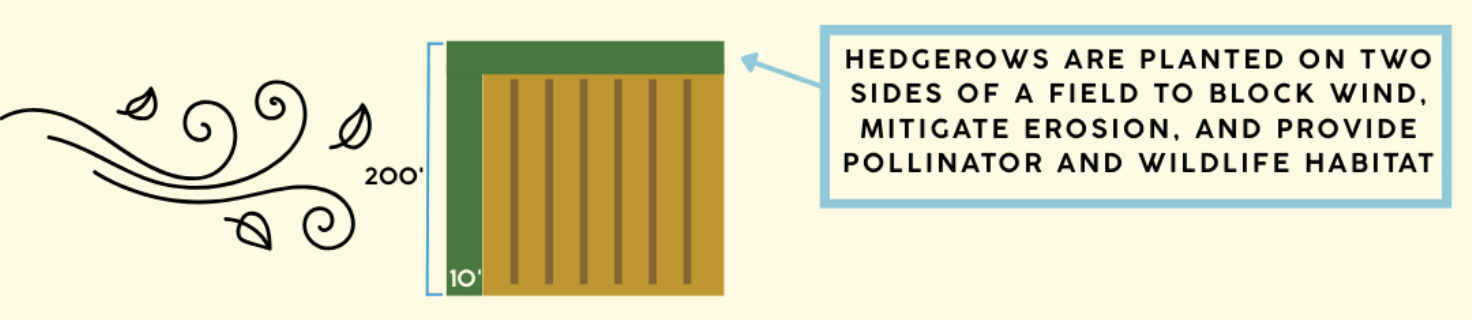
Graphic - Institute of Applied Ecology
These practices are intended to increase pollinator and wildlife habitat, improve soil health, reduce agricultural inputs, and decrease runoff entering the Rio Grande watershed.
Corrales Farms Are in the Priority Area
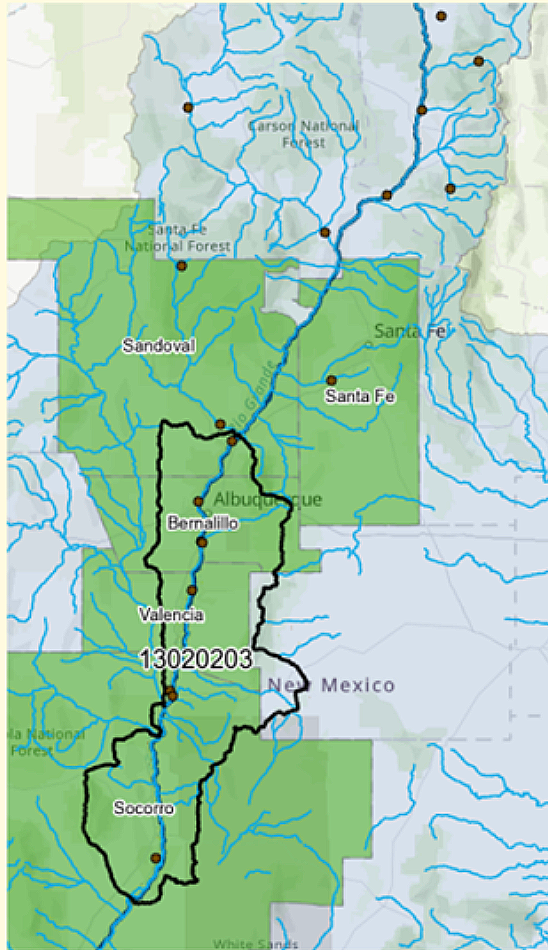
The NM Rio Grande Watershed counties in green and project area outlined in black. Graphic Institute for Applied Ecology
Seven farms have already been selected to participate in the current phase of the program, but IAE is seeking additional farmers for the next round—especially those interested in restoring more than five acres of fallow or degraded land.
Priority will be given to farms in Santa Fe, Sandoval, Bernalillo, Valencia, and Socorro counties that have available acreage adjacent to working agricultural lands. Because Corrales is located in Sandoval County, local farms fall within the project’s priority geographic area.
Restoration seeding and planting for the next group of participating farms is expected to begin in early fall 2027.
Farmers with smaller properties or those interested in other Native Crop Toolkit practices should not assume that the program is only for large landowners. The Southwest Seed Partnership encourages interested farmers to complete its assessment form to explore program participation or other opportunities to become involved as a native-seed grower.
Learning Opportunities for All Farmers
Participation is not limited to farms selected for an on-site installation. Farmers throughout New Mexico can join the Farmer 2 Farmer Hub and take part in workshops, webinars, farm tours, and online technical support.
The Hub is designed to help farmers learn from one another by sharing practical experiences, challenges, and lessons from using native plants on working lands. Technical guides and video chapters are also being developed to make information available to farmers who cannot attend events in person.
This farmer-to-farmer approach recognizes that agricultural conservation practices are most valuable when they can be adapted to real farms. What works on one property may need to be modified for another farm’s soils, water availability, crops, equipment, labor, or production goals.
Interested in Participating?
Corrales farmers who would like to be considered for the program—or who want to explore becoming a grower for the Southwest Seed Partnership—can complete the Farmer 2 Farmer Farm Assessment Form.
To learn more, view webinar information, and follow upcoming workshops and resources, visit the Southwest Seed Partnership Farmer-to-Farmer Hub.
