
Living Roots, Living Soil: Cover cropping for Corrales Farms & Gardens
After the summer harvest, it can be tempting to leave garden beds bare until spring. But a fall cover crop gives that soil something useful to do through the cooler months.
A cover crop is grown to care for the soil rather than for harvest. In Corrales, that can mean protecting topsoil from spring winds, helping water soak in, adding organic matter, and giving weeds less room to grow. Some cover crop flowers also provide food for pollinators.
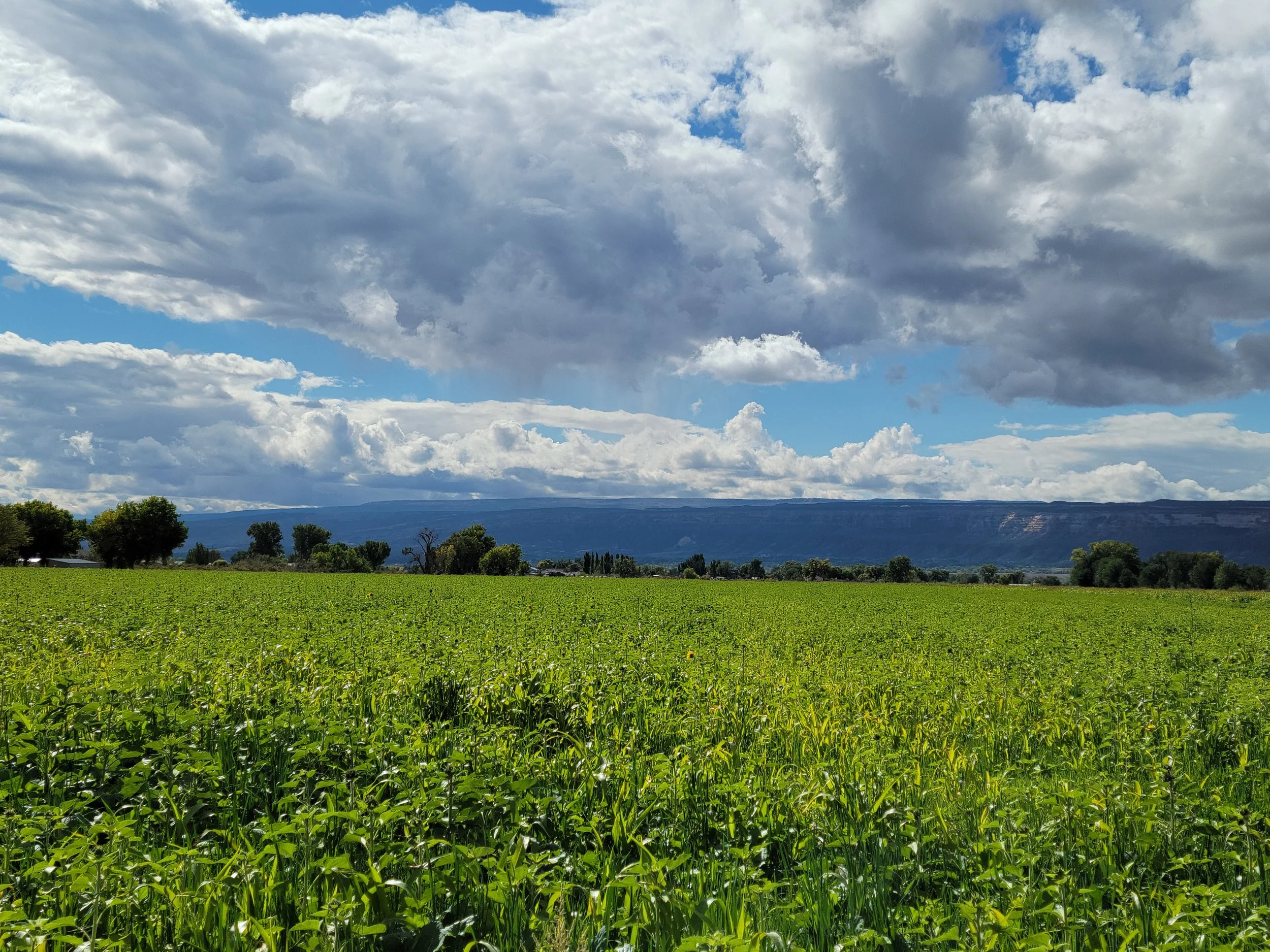
Fallow field in cover crop Grand Junction, CO LGarvin
For the Corrales Farmers’ Cooperative’s fall 2026 cover crop workshop, the featured blend combines two seed mixes. One grows quickly in the fall, with plants such as oats, clovers, peas, phacelia, and flax. Much of that growth dies back in the cold, leaving a protective layer over the soil. The second mix includes winter hardy plants such as rye, wheat, vetch, and winter peas. Their living roots continue working below ground through winter.
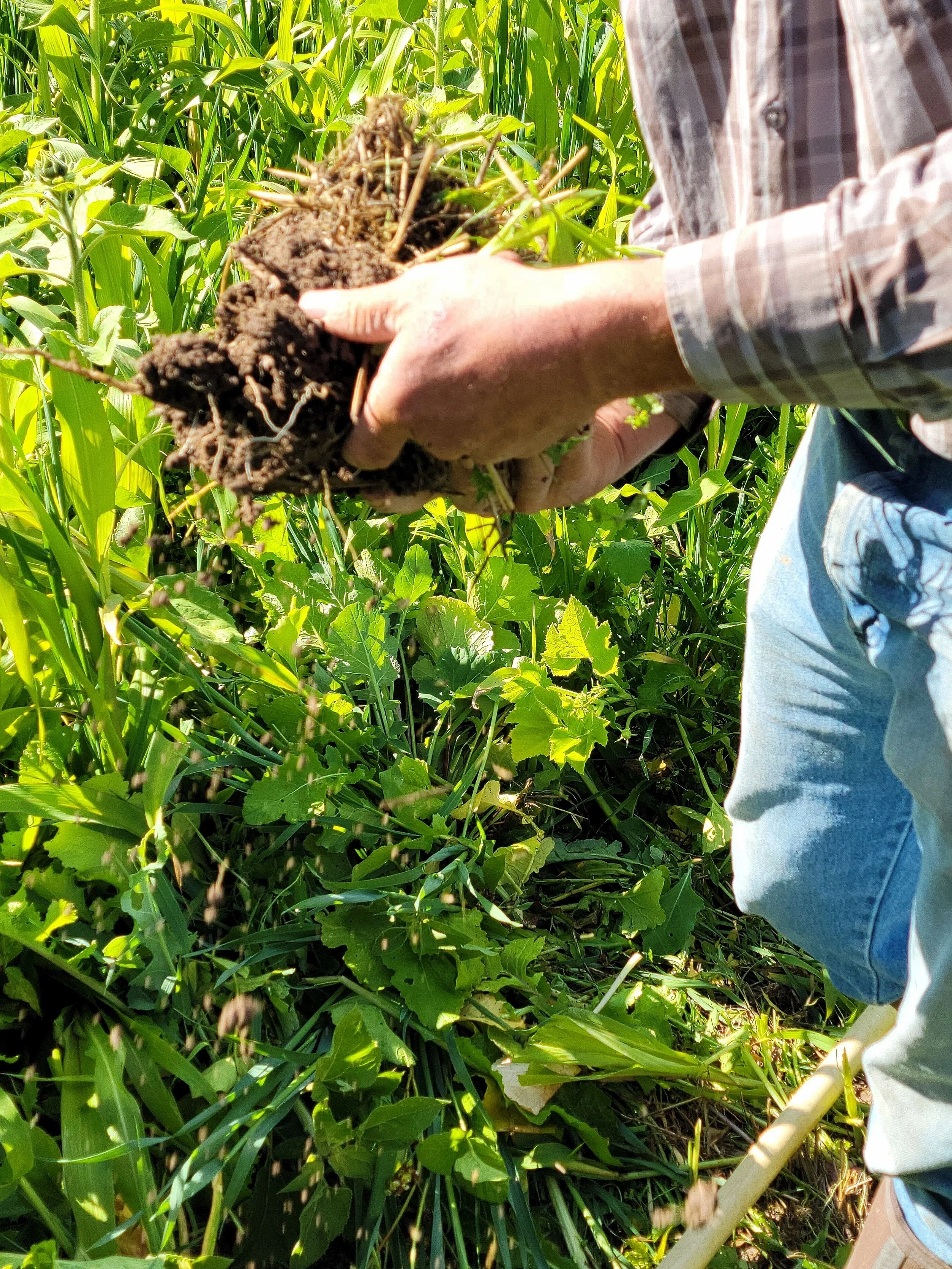
Healthy soil aggregate with living roots under cover crop - LGarvin
Those roots do more than hold soil in place. They help create spaces where irrigation water can soak in and support the soil organisms that make nutrients available to future crops. Legumes, including peas, clovers, and vetch, can also add nitrogen to the soil as they grow.
Want to try the workshop blend? Sow it from September through early October; earlier planting gives roots more time to establish before frost. For every 1,000 square feet, scatter about 2.3 pounds of the combined blend over a clean bed. Rake the seed in lightly, water it, and keep the soil moist while seedlings emerge.
A cover crop does need water while it grows, so timing matters in our dry climate. Let the blend grow through the cool season, then mow, crimp, or cut it down when the rye and vetch begin to flower, before they set seed. Do this about two to three weeks before planting your next crop. Leave the cut plants on the bed as mulch to help shade the soil and slow evaporation.
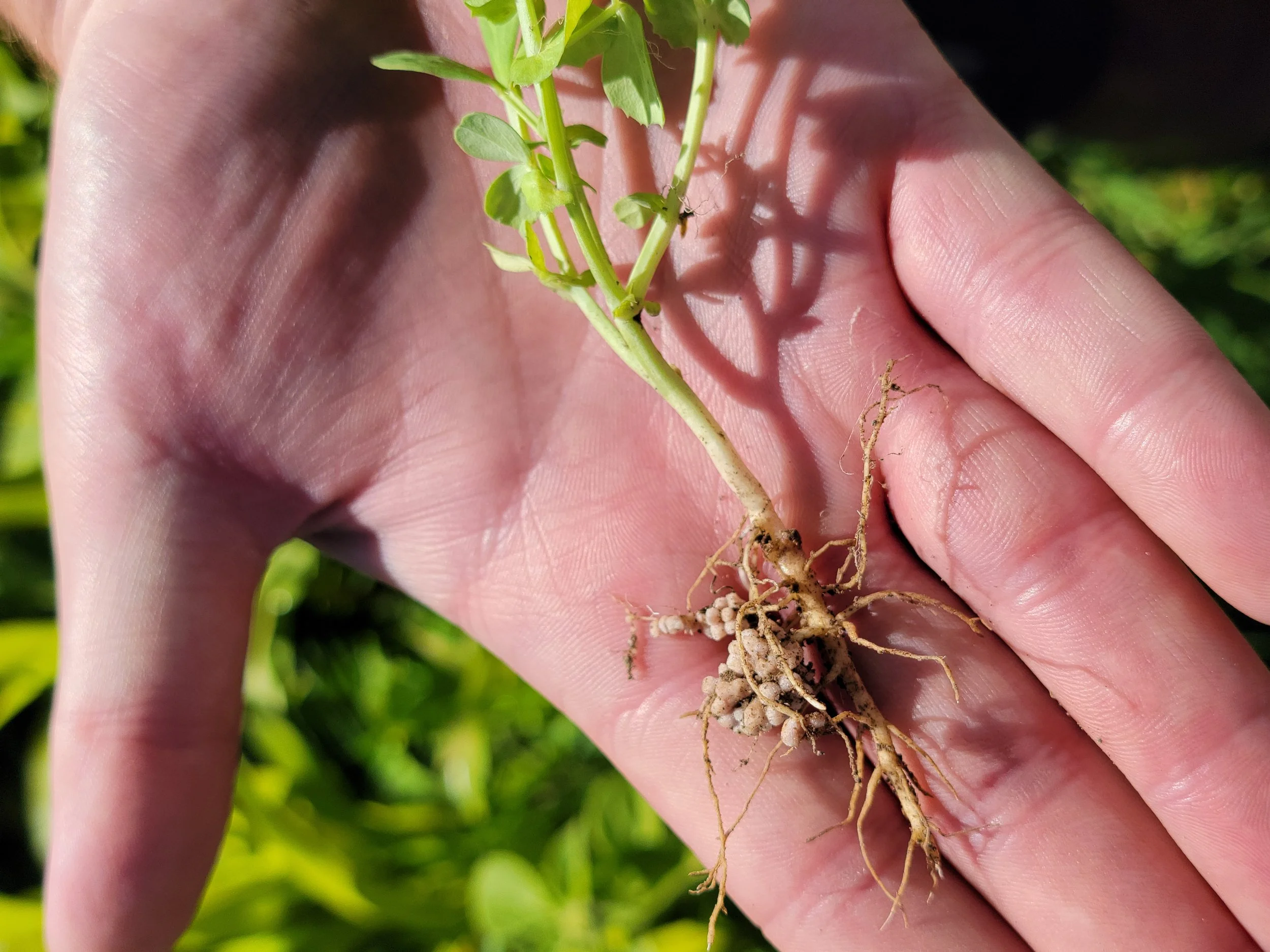
Nitrogen fixing nodules on pea roots - LGarvin
You do not need to understand every partnership happening underground to benefit from it. The simple idea is this: keeping roots in the ground for more of the year helps build soil that is better protected, more welcoming to life, and better prepared for the next growing season.
Based on the Corrales Farmers’ Cooperative’s “Living Roots, Living Soil” cover crop workshop information sheet developed by Ben Dickerson of Parenthetical Farms. The featured blend contains one part Garden Spring/Fall Mix and two parts Garden Winter Survivor.

For more information on Cover Cropping check out the following publications from NMSU.
Using Cover Crops in New Mexico: Impacts and Benefits of Selecting the Right Cover Crops https://pubs.nmsu.edu/_circulars/CR704/index.html
Principles of Cover Crops in New Mexico https://pubs.nmsu.edu/_a/A150/index.html
Cover Crops for Ecosystem Services in New Mexico Vineyards https://pubs.nmsu.edu/_h/H186/index.html
NMSU Study finds cover crops can improve soil health https://newsroom.nmsu.edu/news/nmsu-study-finds-cover-crops-can-improve-soil-health/s/7b59cdbb-8f42-48f7-9385-bac38756fff0
